
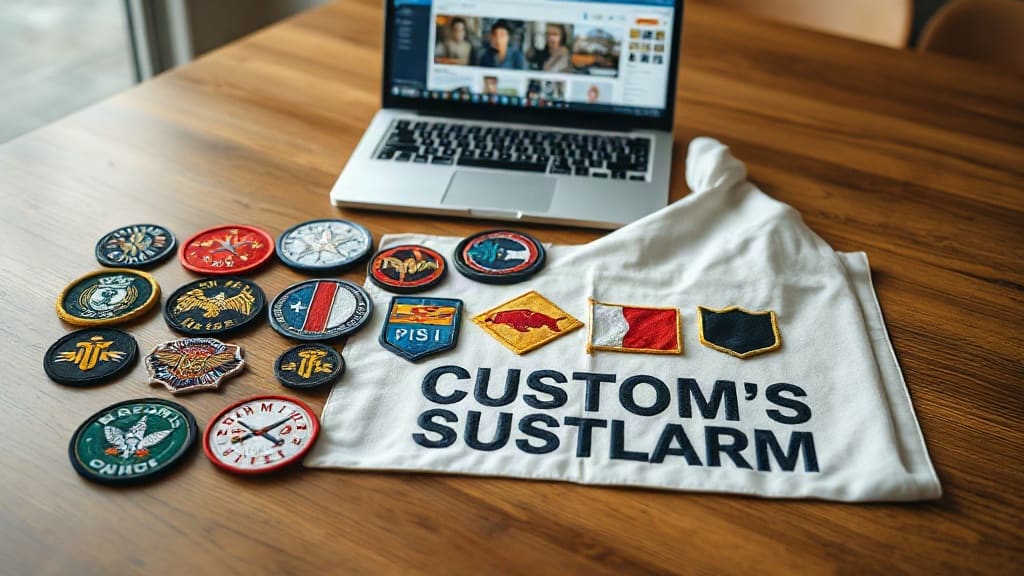
If you sell merchandise or run a brand, you have probably heard about print on demand. It is a fulfillment model where products are printed only after a customer orders them. This means no upfront inventory, no storage costs, and no risk of unsold stock. But did you know that print on demand can also apply to custom patches and custom banners? These often-overlooked items can be powerful tools for brand building, events, and community engagement. In this guide, I will walk you through everything you need to know about using print on demand for custom patches and custom banners, from design to fulfillment.
What Is Print on Demand?
Print on demand is a production method where items are created only after an order is placed. A supplier prints, embroiders, or manufactures the product and ships it directly to the customer. For sellers, this eliminates the need to buy in bulk or manage inventory. Platforms like Printful, Printify, and Gooten have made print on demand popular for apparel, but the same principle applies to custom patches and custom banners.
How Does Print on Demand Work for Custom Patches?
With print on demand custom patches, you upload your design to a supplier's system. When a customer orders, the supplier produces the patch using techniques like embroidery, woven, or printed. Then it is shipped directly. This allows you to offer a wide range of patch designs without holding stock. For example, a scout troop can create a unique patch for each event, and only produce what is needed.
How Does Print on Demand Work for Custom Banners?
Similarly, print on demand custom banners are produced after order. You can offer banners for birthdays, trade shows, or storefronts. The supplier prints on durable materials like vinyl or fabric, then ships. This is ideal for businesses that want to test designs or offer personalized banners without minimum order quantities.
Why Choose Print on Demand for Custom Patches and Banners?
There are several compelling reasons to adopt print on demand for these items.
- No inventory risk: You only pay for what is sold.
- Low startup cost: No need to invest in bulk stock.
- Flexibility: Easily add new designs or change them.
- Scalability: Handle spikes in demand without stockouts.
- Eco-friendly: Reduces waste from unsold products.
For small businesses and creators, this model lowers the barrier to entry. You can test a new patch design or banner style without committing to hundreds of units.
Design Tips for Custom Patches
Creating a great custom patch requires attention to detail. Here are some best practices.
Keep It Simple
Patches are small, so intricate details can get lost. Use bold shapes and limited colors. For embroidered patches, each color adds cost, so simplifying can save money.
Choose the Right Material
Embroidery gives a classic, textured look. Woven patches offer finer detail. Printed patches are great for gradients and photos. Consider where the patch will be used: a jacket patch may need durability, while a decorative patch can be more delicate.
Think About Size and Shape
Common sizes are 2 to 4 inches. Custom shapes are possible but may cost more. For print on demand, stick to standard shapes to keep prices low.
Use High-Resolution Files
Always provide vector files (AI, EPS) or high-res PNGs. Low-res images will result in blurry patches.
Design Tips for Custom Banners
Custom banners are larger, so you have more room for creativity. But some rules still apply.
Consider the Viewing Distance
For a banner seen from far away, use large text and high contrast. For close-up viewing, you can include more details.
Choose the Right Material
Vinyl is durable and weather-resistant, perfect for outdoors. Fabric banners look elegant indoors. Mesh banners allow wind to pass through, ideal for fences.
Include a Clear Call to Action
What do you want people to do? Visit your website? Attend an event? Make sure the message is clear and prominent.
Check the Resolution
For large banners, images should be at least 150 DPI at full size. Otherwise, they may look pixelated.
How to Integrate Print on Demand Custom Patches and Banners into Your Business
If you sell merchandise, adding custom patches and custom banners can diversify your offerings. Here is how to get started.
- Find a supplier: Look for print on demand companies that offer patches and banners. Some specialize in these items.
- Create designs: Use design software or hire an artist. Ensure files meet supplier specifications.
- Set up your store: Connect your e-commerce platform (Shopify, Etsy) to the supplier.
- Market your products: Use social media, email, and your website to promote.
- Monitor quality: Order samples to check quality before selling.
This model works well for artists, nonprofits, sports teams, and businesses. For example, a band can offer custom patches as merch, and a custom banner for their tour. Fans order, and the supplier ships.
Common Mistakes to Avoid
Even with a great model, pitfalls exist. Here are some to watch for.
- Ignoring supplier reviews: Quality varies. Always research.
- Using low-res images: Leads to poor product quality.
- Forgetting about shipping times: Print on demand can take longer. Communicate clearly.
- Not ordering samples: Always check before selling.
- Overcomplicating designs: Simple often sells better.
Frequently Asked Questions
What is the difference between print on demand and bulk ordering for custom patches?
With print on demand, custom patches are made only after an order, so you avoid inventory. Bulk ordering requires buying many upfront, which lowers per-unit cost but risks unsold stock.
Can I use print on demand for custom banners with my own design?
Yes, most print on demand suppliers for custom banners allow you to upload your own design. You just need to provide a high-resolution file.
How long does it take to produce a custom patch or banner with print on demand?
Production times vary by supplier, but typically 2-5 business days for patches and 3-7 for banners, plus shipping. Always check the supplier's turnaround time.
Are print on demand custom patches durable?
Durability depends on the material and production method. Embroidered and woven patches are very durable. Printed patches can be less so, but with proper care, they last.
What file format is best for custom patch and banner designs?
Vector formats like AI, EPS, or PDF are ideal because they scale without losing quality. If not available, high-resolution PNG (300 DPI) works for many suppliers.
Final Thoughts
Print on demand has revolutionized how we sell merchandise, and its application to custom patches and custom banners opens up new possibilities. Whether you are a small business, an artist, or an event organizer, this model lets you offer unique, high-quality products without the burden of inventory. By following the design tips and avoiding common mistakes, you can create items that resonate with your audience. So why not give it a try? Start designing your custom patches and custom banners today and watch your brand grow.