
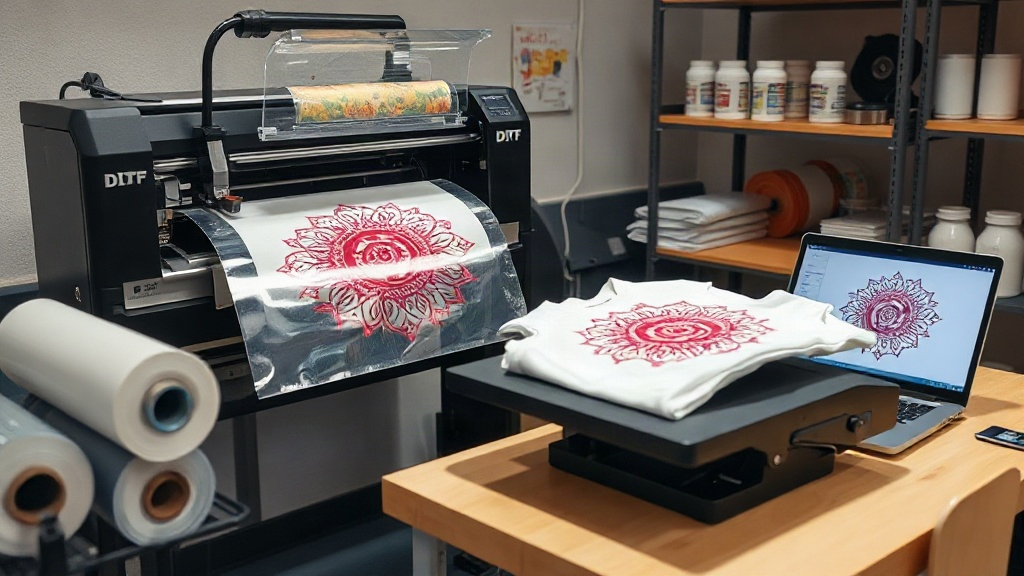
If you're in the print on demand (POD) business, you're always looking for ways to offer high-quality, custom products without breaking the bank. Enter DTF printing, a game-changing technology that's quickly becoming a favorite among POD sellers. Unlike traditional methods, DTF (Direct to Film) printing allows you to transfer intricate, full-color designs onto a wide range of fabrics and even hard surfaces, all from a single printer. In this guide, we'll dive deep into DTF printing, from how it works to why it might be the perfect fit for your POD shop.
What is DTF Printing?
DTF stands for Direct to Film. It's a printing process where your design is printed onto a special film, coated with adhesive powder, and then heat-pressed onto the fabric. The result is a vibrant, durable transfer that feels soft to the touch and withstands repeated washing. Unlike DTG (Direct to Garment) printing, which requires pre-treatment and works best on 100% cotton, DTF printing adheres to a variety of materials, including polyester, blends, and even leather. This versatility makes it a powerhouse for POD sellers who want to offer diverse products without investing in multiple printing technologies.
How Does DTF Printing Work?
The DTF printing process involves several steps, but it's surprisingly straightforward once you get the hang of it. Here's a breakdown:
- Design Preparation: Create your artwork and mirror it horizontally. This ensures the text reads correctly after transfer.
- Printing: Use a DTF printer with specialty inks (CMYK plus white) to print the design onto a PET film. The white ink acts as a base, allowing the colors to pop on dark fabrics.
- Powder Application: While the ink is still wet, sprinkle a thermoplastic adhesive powder over the film. Shake off the excess.
- Curing: Heat the film to melt the powder, creating a bond that will adhere to the fabric.
- Transfer: Place the film on your substrate and apply heat and pressure with a heat press. Once cooled, peel off the film to reveal your design.
Each step requires attention to detail, but the learning curve is manageable. Many POD sellers start with a small DTF printer and scale up as demand grows.
Why Choose DTF for Print on Demand?
DTF printing offers several advantages that make it ideal for the POD model, where flexibility and cost-efficiency are key.
1. Fabric Versatility
One of the biggest pain points in POD is matching the right printing method to the right fabric. DTG works well on cotton, sublimation on polyester, and vinyl on simple designs. DTF eliminates that headache. It adheres to cotton, polyester, nylon, leather, and more. This means you can offer the same design on t-shirts, hoodies, tote bags, and even phone cases without changing your process.
2. No Pre-Treatment Required
DTG printing often requires pre-treating the garment to ensure the ink bonds properly. That's an extra step that costs time and money. DTF skips this entirely. You simply print, powder, cure, and press. This streamlines your workflow and reduces overhead.
3. Cost-Effective for Small Batches
Traditional screen printing requires separate screens for each color, making small runs expensive. DTF printing has no such setup costs. You can print one-off designs or small batches without breaking the bank. This is perfect for POD, where you might offer hundreds of unique designs without holding inventory.
4. Vibrant Colors and Fine Details
DTF printers use high-quality inks that produce bright, saturated colors. The white ink base ensures that even on dark garments, your design stands out. Plus, DTF can handle fine lines, gradients, and photographic images with impressive clarity.
DTF vs. Other Printing Methods
To help you decide if DTF is right for your POD business, let's compare it to other popular methods.
DTF vs. DTG
- Fabric Compatibility: DTG works best on 100% cotton; DTF works on almost any fabric.
- Pre-Treatment: DTG requires pre-treatment; DTF does not.
- Durability: DTF prints tend to be more durable and stretch with the fabric, while DTG can fade over time.
- Cost: DTF has a higher upfront cost for the printer and supplies, but lower cost per print for small batches.
DTF vs. Sublimation
- Fabric Compatibility: Sublimation only works on polyester or polymer-coated items; DTF works on natural fibers too.
- Color Vibrancy: Sublimation dyes the fabric, so the print is part of the material; DTF sits on top but still offers vibrant colors.
- White Ink: Sublimation cannot print white; DTF can, making it better for dark garments.
DTF vs. Vinyl
- Complexity: Vinyl requires weeding and layering for multi-color designs; DTF prints the entire design in one go.
- Durability: Vinyl can crack over time; DTF is more flexible and less prone to cracking.
- Time: DTF is faster for intricate designs.
Getting Started with DTF Printing
Ready to add DTF to your POD arsenal? Here's what you need to know.
Equipment and Supplies
- DTF Printer: Options range from entry-level to industrial. Look for one with good resolution and white ink circulation.
- DTF Inks: Use high-quality inks designed for DTF. Cheap inks can clog printheads and produce dull colors.
- PET Film: Choose film thickness based on your design detail. Thinner film for fine lines, thicker for bold graphics.
- Adhesive Powder: Available in fine or coarse grades. Fine powder works for detailed designs.
- Heat Press: A reliable heat press with even pressure is crucial for consistent transfers.
- Curing Oven or Heat Gun: To melt the powder. Some use a heat press for curing, but a dedicated oven is more efficient.
Step-by-Step DTF Process
- Create and Mirror Your Design: Use graphic software to prepare your artwork. Remember to mirror it.
- Print on Film: Load the film into your DTF printer and print. Ensure the white ink layer is properly laid down.
- Apply Powder: While the print is wet, cover it with adhesive powder. Shake off excess gently.
- Cure the Powder: Place the film in a curing oven at the recommended temperature until the powder melts and becomes glossy.
- Press onto Garment: Preheat your heat press to the recommended settings (usually around 160°C for 15-20 seconds). Place the film on the garment and press.
- Peel and Enjoy: Once cooled, peel off the film. Your design is now permanently bonded.
Tips for Success
- Test Your Settings: Every printer, film, and powder combination behaves differently. Do test prints to dial in temperature, pressure, and time.
- Store Film Properly: Keep PET film in a cool, dry place to prevent curling.
- Maintain Your Printer: Regular cleaning and maintenance prevent clogs and ensure consistent output.
- Offer Samples: Send samples to customers to showcase the quality and durability of DTF prints.
Is DTF Printing Right for Your POD Business?
If you're looking to expand your product range, reduce production steps, and offer durable, vibrant designs, DTF printing is a strong contender. It's particularly beneficial if you want to print on a variety of fabrics without investing in multiple technologies. However, consider your volume: if you're doing large runs of a single design, screen printing might be more cost-effective. For the typical POD model with many designs and small batches, DTF shines.
Frequently Asked Questions
What fabrics can I use with DTF printing?
DTF printing works on a wide range of fabrics, including cotton, polyester, blends, nylon, leather, and even some treated woods. It's one of the most versatile printing methods available.
How durable is a DTF print?
When applied correctly, DTF prints are highly durable. They can withstand dozens of washes without fading or cracking. Proper curing and pressing are key to longevity.
Can I use DTF printing for dark garments?
Absolutely. DTF printing uses a white ink base that allows colors to pop on dark fabrics. This is a major advantage over DTG, which can struggle with dark colors.
What is the cost of setting up DTF printing?
Initial costs include a DTF printer (starting around $1,500 for entry-level), inks, film, powder, and a heat press. Ongoing costs are relatively low, especially for small batches.
Do I need a special printer for DTF?
Yes, you need a DTF printer that uses DTF inks and has a white ink channel. You can convert some inkjet printers, but dedicated DTF printers are recommended for best results.