
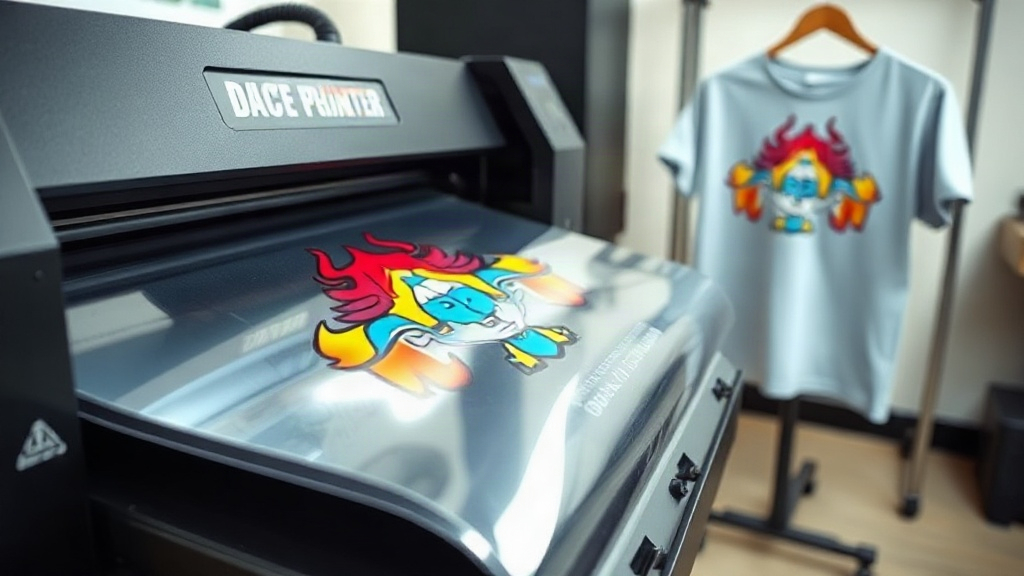
If you've been exploring print on demand (POD), you've likely heard about DTF printing. It's a relatively new method that's taking the custom apparel world by storm. But what exactly is DTF, and why should you consider it for your POD business? In this guide, we'll break down everything you need to know about DTF printing, from the basics to advanced tips, so you can decide if it's right for you.
What is DTF Printing?
DTF stands for Direct to Film. It's a printing technique where your design is printed onto a special film, coated with a adhesive powder, and then heat-pressed onto fabric. Unlike DTG (Direct to Garment) which prints directly onto the shirt, DTF uses a transfer film as an intermediary. This allows for vibrant, detailed prints on a wide range of fabrics, including cotton, polyester, blends, and even nylon. The process is gaining popularity because it eliminates many of the limitations of other printing methods.
How Does DTF Printing Work?
The DTF process involves several key steps:
- Design Preparation: Your artwork is prepared digitally, usually with a transparent background. The printer software mirrors the image and adds a white underbase if needed.
- Printing: A DTF printer uses special inks (CMYK + white) to print the design onto a PET film. The white ink acts as a base, allowing the colors to pop on dark garments.
- Powdering: While the ink is still wet, a thermoplastic powder (often called hot melt adhesive) is applied to the printed film. Excess powder is shaken off.
- Curing: The film with powder is heated to melt the powder, creating a adhesive layer that will bond to the fabric.
- Transfer: The cured film is placed on the garment and heat-pressed. The adhesive melts, bonding the design to the fabric. After cooling, the film is peeled away, leaving the design behind.
This multi-step process might sound complex, but with the right equipment, it becomes a smooth workflow. The result is a durable, stretchable print that can withstand repeated washing.
Why Choose DTF for Print on Demand?
DTF offers several advantages that make it a great fit for POD businesses:
- No color limitations: Unlike screen printing, DTF can handle full-color designs with gradients, fine details, and photographs without extra cost.
- Works on many fabrics: You're not limited to cotton. DTF adheres well to polyester, blends, and even treated nylon, opening up more product options.
- No weeding or cutting: Unlike vinyl, there's no manual weeding required. This saves time and reduces waste.
- Durability: When applied correctly, DTF prints are stretchable and resist cracking, peeling, and fading.
- Low minimums: You can print one-off designs without setup fees, perfect for POD.
- Cost-effective for small batches: For short runs, DTF is often more economical than screen printing.
These benefits make DTF an attractive option for entrepreneurs who want to offer custom apparel without inventory risk.
DTF vs. Other Printing Methods
How does DTF stack up against DTG, screen printing, and vinyl?
DTF vs. DTG
DTG prints directly onto the garment, which works best on 100% cotton. It can be inconsistent on blends and often requires pre-treatment. DTF, on the other hand, can print on almost any fabric and doesn't require pre-treatment. DTF prints tend to be more durable and vibrant, especially on dark colors. However, DTG has a softer hand feel and is better for very fine details. Both have their place, but DTF is more versatile.
DTF vs. Screen Printing
Screen printing is cost-effective for large orders but requires separate screens for each color, making small runs expensive. DTF has no setup costs and can print full-color designs in one go. For POD, where orders are typically one-offs, DTF is far more practical.
DTF vs. Vinyl
Heat transfer vinyl (HTV) requires weeding and layering for multi-color designs, which is time-consuming. DTF eliminates weeding and can produce complex designs in a single transfer. Vinyl can be more durable for simple text, but DTF wins for detailed artwork.
Getting Started with DTF Printing
If you're ready to add DTF to your POD business, here's what you'll need:
- DTF Printer: Options range from converted Epson printers to dedicated DTF machines. Expect to invest $1,500 to $10,000+ depending on size and speed.
- DTF Inks: Special pigment inks designed for DTF, including white.
- DTF Film: PET film rolls or sheets.
- Adhesive Powder: Thermoplastic powder for bonding.
- Heat Press: A commercial-grade heat press capable of uniform pressure and temperature.
- Curing Oven or Heat Gun: To melt the powder (some use the heat press for curing, but a dedicated oven is more consistent).
- Design Software: Like Photoshop or Illustrator to prepare artwork.
You'll also need a well-ventilated workspace and proper safety gear (mask, gloves) when handling powder.
Step-by-Step DTF Printing Process
1. Prepare Your Artwork
Create your design in CMYK mode. Mirror the image horizontally. If printing on dark fabric, ensure your design has a white underbase (most DTF RIP software handles this automatically). Save as TIFF or PNG with transparency.
2. Print the Design
Load the DTF film into your printer. Print the design using the DTF ink set. The printer will lay down color and white ink in the correct order.
3. Apply Adhesive Powder
While the ink is still wet, sprinkle the adhesive powder evenly over the printed area. Use a powder shaker for best results. Then, tilt the film and tap off excess powder. You want a thin, even coating.
4. Cure the Powder
Place the film in a curing oven at around 320°F (160°C) for 2-3 minutes, or until the powder melts and becomes glossy. Alternatively, use a heat press with a protective sheet for 10-15 seconds. The powder should turn from white to clear.
5. Heat Press the Transfer
Preheat your heat press to 320°F (160°C). Place the garment on the press, then position the DTF transfer on top. Cover with a Teflon sheet or parchment paper. Press for 10-15 seconds with medium pressure. For best results, press again from the back for 5-10 seconds.
6. Peel and Cool
Allow the transfer to cool completely before peeling. Then, peel the film off in a smooth, consistent motion. If any part of the design lifts, re-press for a few seconds. Your custom apparel is ready!
Common DTF Printing Challenges and Solutions
- Clogged printheads: Regular maintenance and daily printing prevent clogs. Use a cleaning solution and follow the manufacturer's guidelines.
- Poor adhesion: Ensure the powder is fully cured and the heat press settings are correct. Also, pre-press the garment to remove moisture.
- Color inconsistency: Use ICC profiles and calibrate your printer regularly. DTF inks can vary, so stick with a reputable brand.
- Film curling: Store film in a dry place and avoid excessive heat. Use a film holder during printing.
- Powder mess: Work in a contained area and use a powder shaker. Consider a powder recycling system.
With practice, these issues become manageable, and you'll develop a smooth workflow.
DTF Printing for Your Print on Demand Business
Integrating DTF into your POD business can set you apart. You can offer a wider range of products, from t-shirts and hoodies to tote bags and pillow covers. Because DTF works on various fabrics, you're not limited to cotton. Plus, the ability to print one-off designs means you can test new ideas without inventory risk.
Consider these tips to maximize success:
- Offer samples: Send potential customers a sample print to showcase quality.
- Market your unique designs: Use social media to highlight the vibrancy and durability of DTF prints.
- Partner with a fulfillment service: If you don't want to handle printing yourself, many POD services now offer DTF.
- Stay updated: DTF technology is evolving rapidly. Join forums and follow industry news to keep your skills sharp.
By mastering DTF, you can deliver high-quality custom products that customers love, all while keeping your costs low and your operations flexible.
Frequently Asked Questions about DTF Printing
Is DTF printing durable?
Yes, when applied correctly, DTF prints are highly durable. They can stretch with the fabric and withstand dozens of washes without cracking or fading. Proper curing and pressing are key.
Can I use DTF on dark colors?
Absolutely. DTF uses a white underbase, so colors remain vibrant on dark fabrics. In fact, DTF is one of the best methods for printing on black or navy garments.
What fabrics work with DTF?
DTF works on cotton, polyester, cotton-poly blends, nylon, and even leather (with testing). It's not recommended for fabrics with special coatings or waterproof treatments.
Do I need a special printer for DTF?
You can convert a standard inkjet printer (like Epson) to DTF with a DTF ink system and RIP software. However, dedicated DTF printers are more reliable and efficient for high-volume production.
How long does the DTF process take?
From printing to pressing, a single transfer can take 10-15 minutes. With practice and batch processing, you can speed this up significantly. Curing can be done in batches, saving time.
Is DTF cost-effective for small orders?
Yes, DTF has no minimum order quantity and no setup fees, making it ideal for one-off orders. The cost per print is higher than screen printing for large runs, but for POD, it's often the most economical choice.